
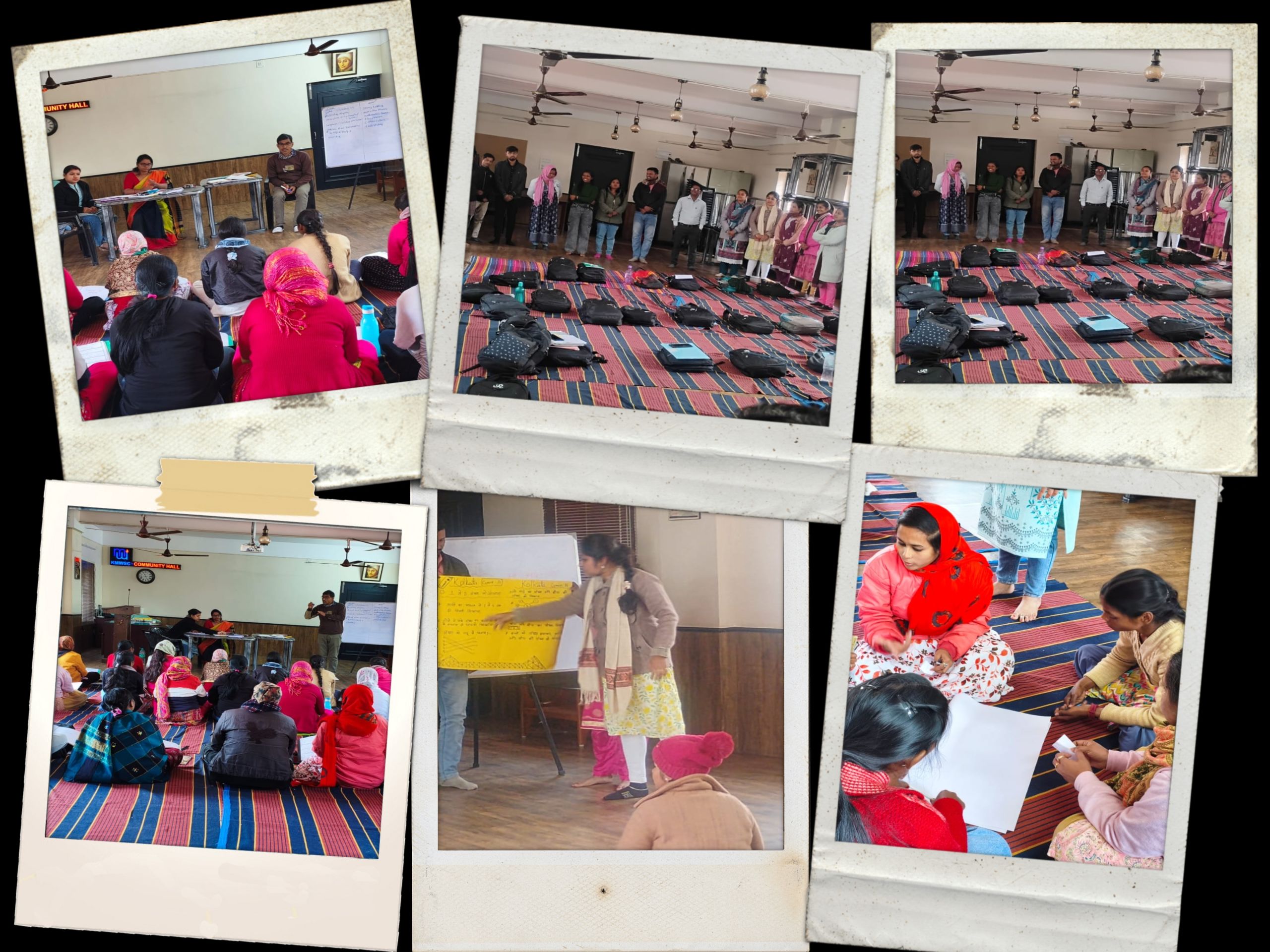
A two-day capacity building training for teachers of the Brickfield School Project was conducted on 15th and 16th January 2026 with the objective of deepening pedagogical understanding, strengthening collaboration, and improving classroom practice for children of migrant brickfield families. The training brought together 36 teachers from Pujali and Kalyani on Day 1, and 23 teachers from three project locations on Day 2, reflecting the project’s commitment to continuous professional development.
The programme began each day with registration, breakfast, and a prayer, setting a reflective and participatory tone. The sessions opened with an interactive ice-breaking exercise where teachers introduced their partners by sharing two strengths and two areas for growth, encouraging trust, openness, and mutual respect. Teachers also articulated their expectations from the training, helping facilitators tailor discussions to their needs.
A key focus of the training was peer support and leadership. Teachers reflected on how they could better support their colleagues and lead teachers, while also sharing their major learnings and challenges from classroom practice. Structured feedback on the curriculum enabled constructive dialogue on its strengths and areas for improvement.
Hands-on pedagogical learning formed the core of the training. Through demonstration classes using a lottery system, new and experienced teachers engaged in experiential learning. Group work on number and language activities for different learner levels (Groups A, B, and C) helped teachers design age-appropriate, activity-based lessons. The sessions also included discussions on baseline assessment to better understand children’s learning levels and plan responsive teaching strategies.
The training concluded with reflective teacher feedback, reinforcing a culture of learning, collaboration, and accountability. Overall, the workshop strengthened teachers’ confidence, skills, and shared commitment to joyful, inclusive, and child-centred education in brickfield communities.
“Empowered teachers, stronger classrooms, brighter futures for migrant children.”
***
 Recent Posts
Opening Doors to Edu...
From Brickfields to ...
International Womenâ...
Enter your email and subscribe with our monthly Newsletter.
One Billion Rising 2020 One Billion Rising Campaign-2020
Recent Posts