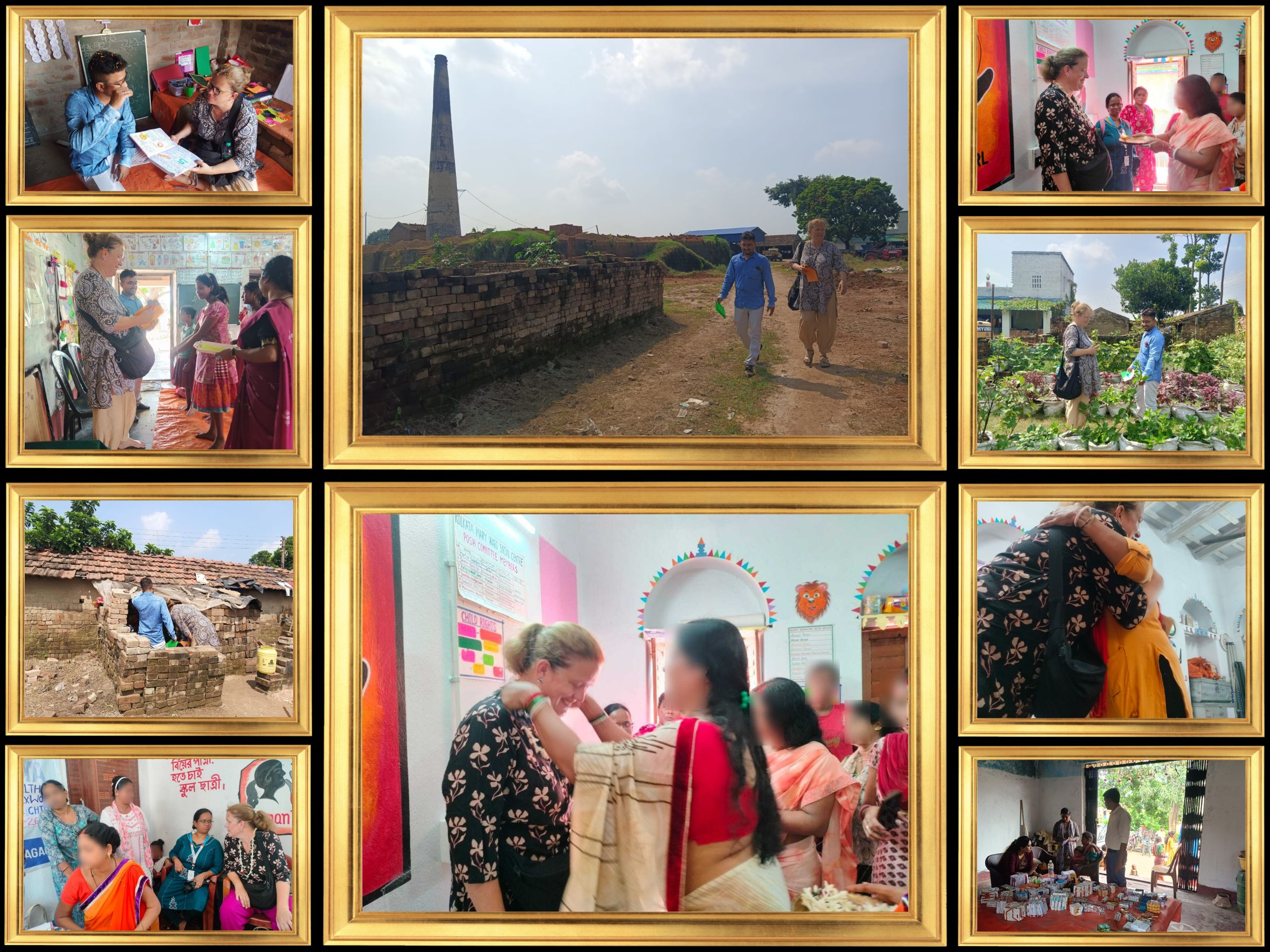
Some stories are best understood not through reports or photographs, but by meeting the people whose lives they touch. On 28 and 29 September 2026, Ms. Nicoletta Regazzoni from Switzerland visited two KMWSC project locations, gaining a first-hand glimpse into the realities, aspirations and resilience of the communities supported through KMWSC's programmes.
Her visit began at Sonagachi, where she spent time at the Red Light Project resource centre and interacted with mothers and children from the community. She also witnessed a health check-up camp, observing how the project brings essential support and services closer to families who often face multiple social and economic challenges. The interactions offered an opportunity to understand the everyday realities of the community and the importance of creating safe and supportive spaces for children and mothers.
On the following day, Ms. Regazzoni travelled to Kalyani to visit the Brickfield School Project. She observed classroom activities and reviewed the project's curriculum, lesson plans and teaching methodology. She was also introduced to the Organic Sack Farming initiative, which seeks to strengthen livelihood opportunities and food security among migrant brickfield families.
Her visit extended beyond the project centre and classroom. Meeting migrant families living and working in the brickfields provided a deeper understanding of the circumstances in which the children and communities are reached by the project. It brought the realities behind project reports into focus, connecting programme activities with the lives and aspirations of the people they are designed to support.
The two-day visit was therefore more than an assessment of activities. It was an opportunity for dialogue, shared learning and a closer understanding of the journey from support to impact. For KMWSC, such visits reaffirm the importance of partnerships built on trust, transparency and a shared commitment to creating meaningful change.
“Beyond reports and numbers, meaningful change is found in the lives of people and communities.”
***
 Recent Posts
Opening Doors to Edu...
From Brickfields to ...
International Womenâ...
Enter your email and subscribe with our monthly Newsletter.
One Billion Rising 2020 One Billion Rising Campaign-2020
Recent Posts