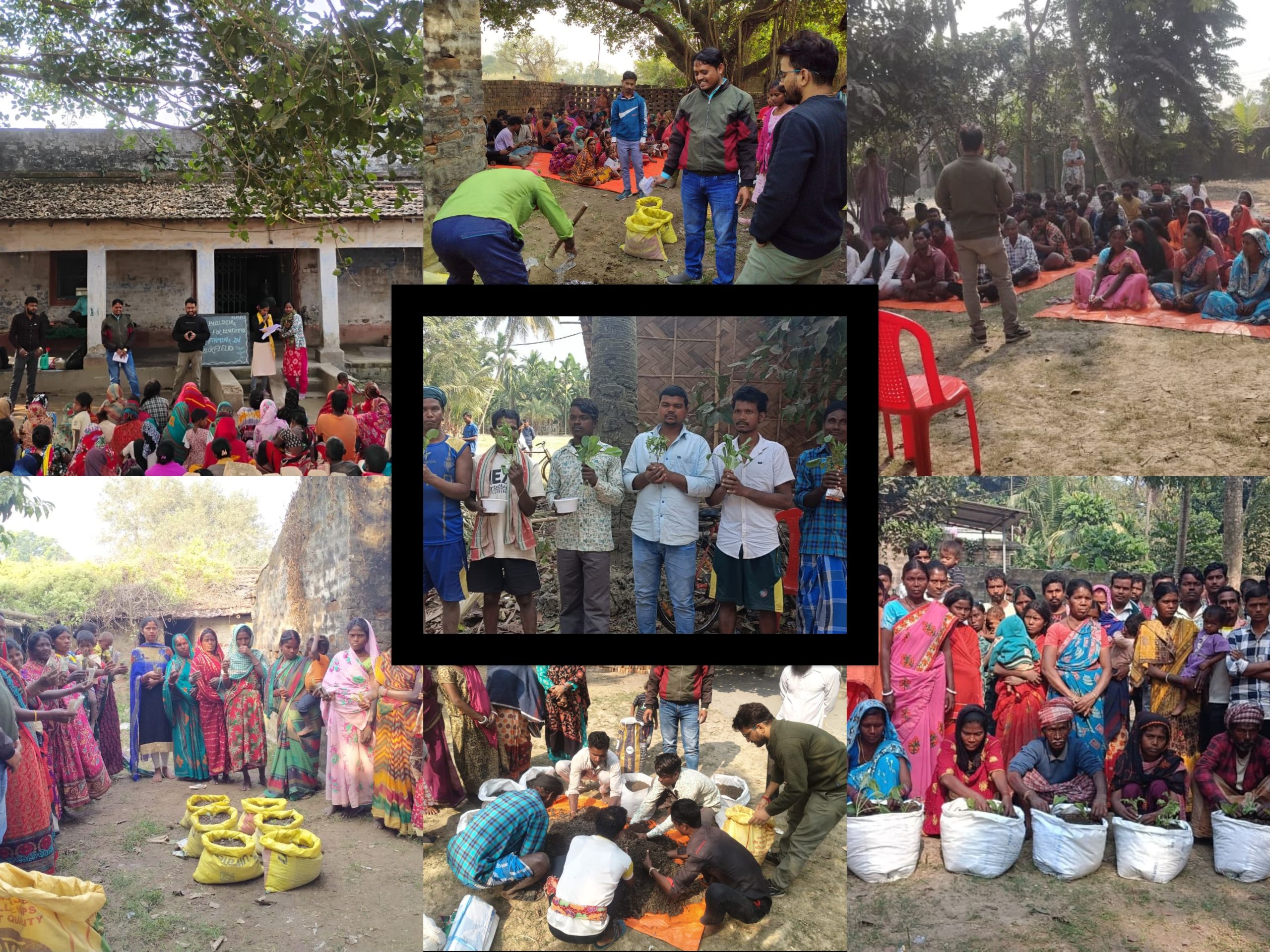
As part of its continued efforts to promote nutritious food practices and alternative sustainable livelihoods among less-privileged migrant brickfield communities, the Sack Farming Project team conducted two consecutive capacity-building trainings on Organic Sack Farming on 12th and 13th December 2025 at Kalyani and Pujali respectively.
On both days, the trainings followed a uniform structure and curriculum, combining theoretical understanding with hands-on practical learning. The sessions began with an orientation highlighting the need, relevance, and long-term benefits of sack farming as a low-cost, space-efficient, and environmentally friendly method of vegetable cultivation that can enhance household nutrition while offering scope for supplementary income.
The training resource person then demonstrated the step-by-step process of preparing sacks, mixing soil with vermicompost and other organic inputs, and filling the sacks appropriately. Participants were guided through the selection of seasonal crops, planting of saplings with proper spacing, and essential care practices. Detailed discussions were also held on the use of organic fertilizers, natural insecticides and pesticides, watering methods, and routine crop maintenance to ensure healthy yields.
At Kalyani, beneficiaries from seven brickfields in the Majherchor area participated actively in the training, while the session at Pujali was attended by around 70 male and female beneficiaries. Across both locations, the interactive format encouraged questions, experience-sharing, and peer learning, resulting in strong engagement and confidence-building among participants.
The enthusiastic response observed during both trainings reflected the beneficiaries’ readiness to adopt sack farming as a practical solution for improving food security and livelihoods. The initiative reaffirmed the project’s commitment to empowering marginalized communities with simple, eco-friendly, and sustainable livelihood practices.
“Small sacks, big possibilities – towards healthier families and sustainable futures”
***
 Recent Posts
Opening Doors to Edu...
From Brickfields to ...
International Womenâ...
Enter your email and subscribe with our monthly Newsletter.
One Billion Rising 2020 One Billion Rising Campaign-2020
Recent Posts